Software Systems
Architecture, implementation, AI systems, interactive products, data flows, automation, operational reliability, and the judgment earned by shipping real work.
What I Can Already CarryNanotechnology Scientist In The Making
I have spent more than fifteen years building systems from bits. I am now earning the scientific and engineering depth required to understand, measure, and eventually shape systems made from atoms.
This is not an education itinerary or a premature title. It is a public research direction; the ambition is to become a nanotechnology scientist whose software judgment, physical engineering ability, and evidence standards belong in one complete practice.
Why Atoms Now
Software taught me to look for boundaries, state, feedback, failure, and leverage. Nanotechnology asks those same instincts to survive contact with energy, chemistry, fabrication, uncertainty, and measurement.
What fascinates me is not smallness as spectacle. It is the possibility that carefully engineered structure can change sensing, computation, energy, medicine, filtration, and materials; then the responsibility of proving when it actually does.
Bits taught me how to construct possibility; atoms are teaching me how possibility negotiates with reality.
The aim is not isolated heroics. It is uncommon end-to-end fluency; enough range to carry a product from physical principle through electronics, software, and user value while knowing when deeper collaboration is essential.
Architecture, implementation, AI systems, interactive products, data flows, automation, operational reliability, and the judgment earned by shipping real work.
What I Can Already CarryMathematics, physics, chemistry, circuits, signals, device behavior, materials, instrumentation, laboratory safety, fabrication, and experimental discipline.
What Reality Still RequiresOne engineer able to trace the complete causal chain from material mechanism to device, firmware, software, product experience, manufacturing constraint, and human outcome.
What The Pursuit Can Become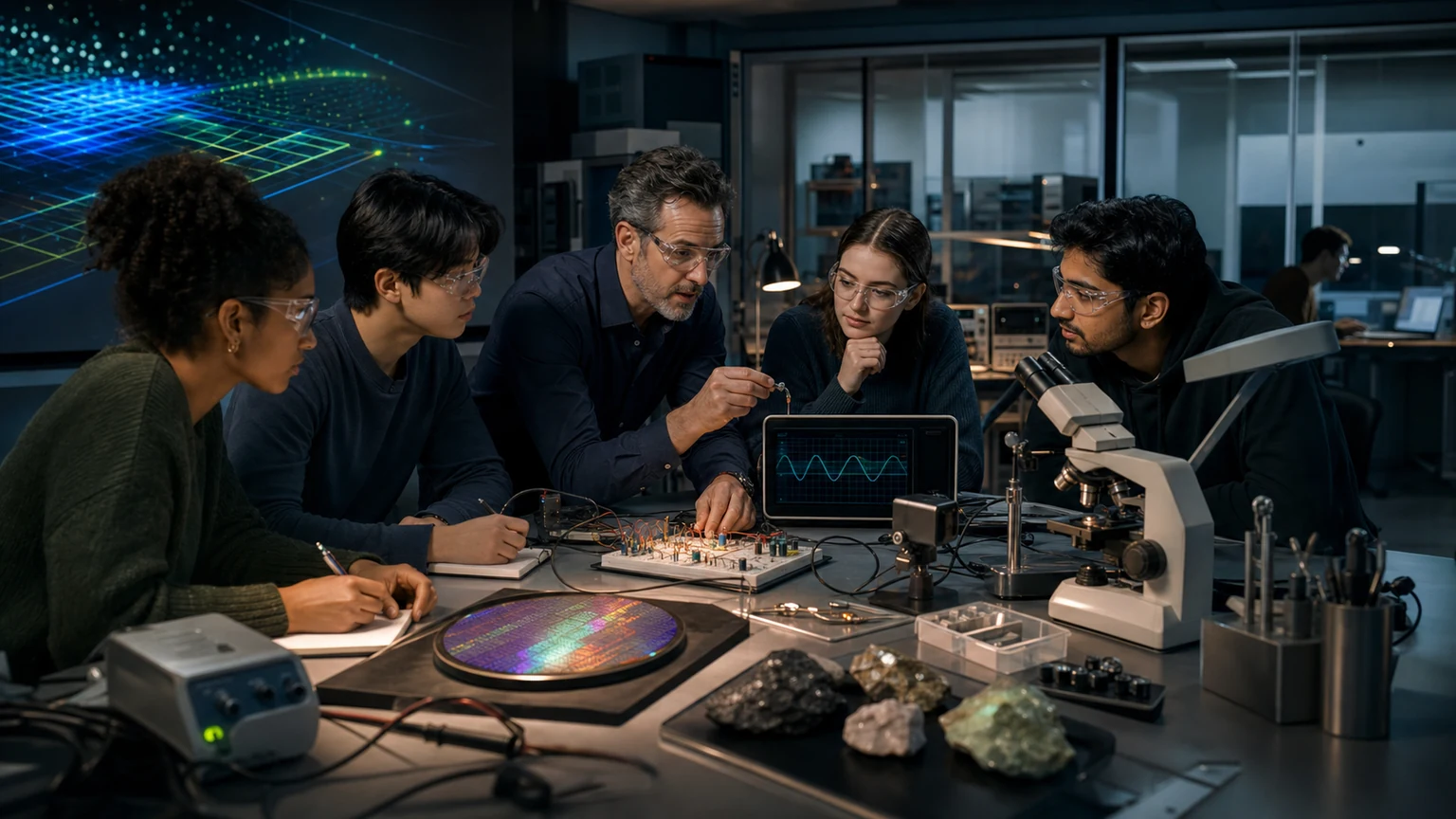
The ambition becomes useful through supervised learning, collaboration, instrumentation, and the discipline to let physical evidence revise the model.
Complete does not mean alone. The most meaningful science is collaborative, specialized, and reviewed. Independence is a capability; intellectual isolation is a liability.
The first lesson is not a catalog of futuristic products. It is learning why human scale intuition fails, which forces take control, and how evidence distinguishes a mechanism from a metaphor.
As characteristic length shrinks, surface area grows relative to volume; interfaces, adhesion, reaction, and exchange become increasingly consequential.
At low Reynolds number, viscous forces dominate inertia; tiny machines need motion strategies designed for their actual fluid regime.
Diffusion and Brownian motion are not background imperfections; they shape transport, sensing, control, and the evidence needed to prove direction.
Surface charge and nearby ions can influence stability, binding, motion, and measurement; the surrounding medium belongs inside the design.
At small dimensions, boundaries and defects can reshape thermal transport; smaller devices still need a complete, measurable path for heat.
Quantum confinement and tunneling reveal a regime where geometry can alter available states, optical response, and barrier behavior.

More exposed interface means chemistry, adhesion, charge, and environmental exchange can claim a larger role in the system.

Viscosity, diffusion, and Brownian motion change how movement, transport, and evidence must be designed.
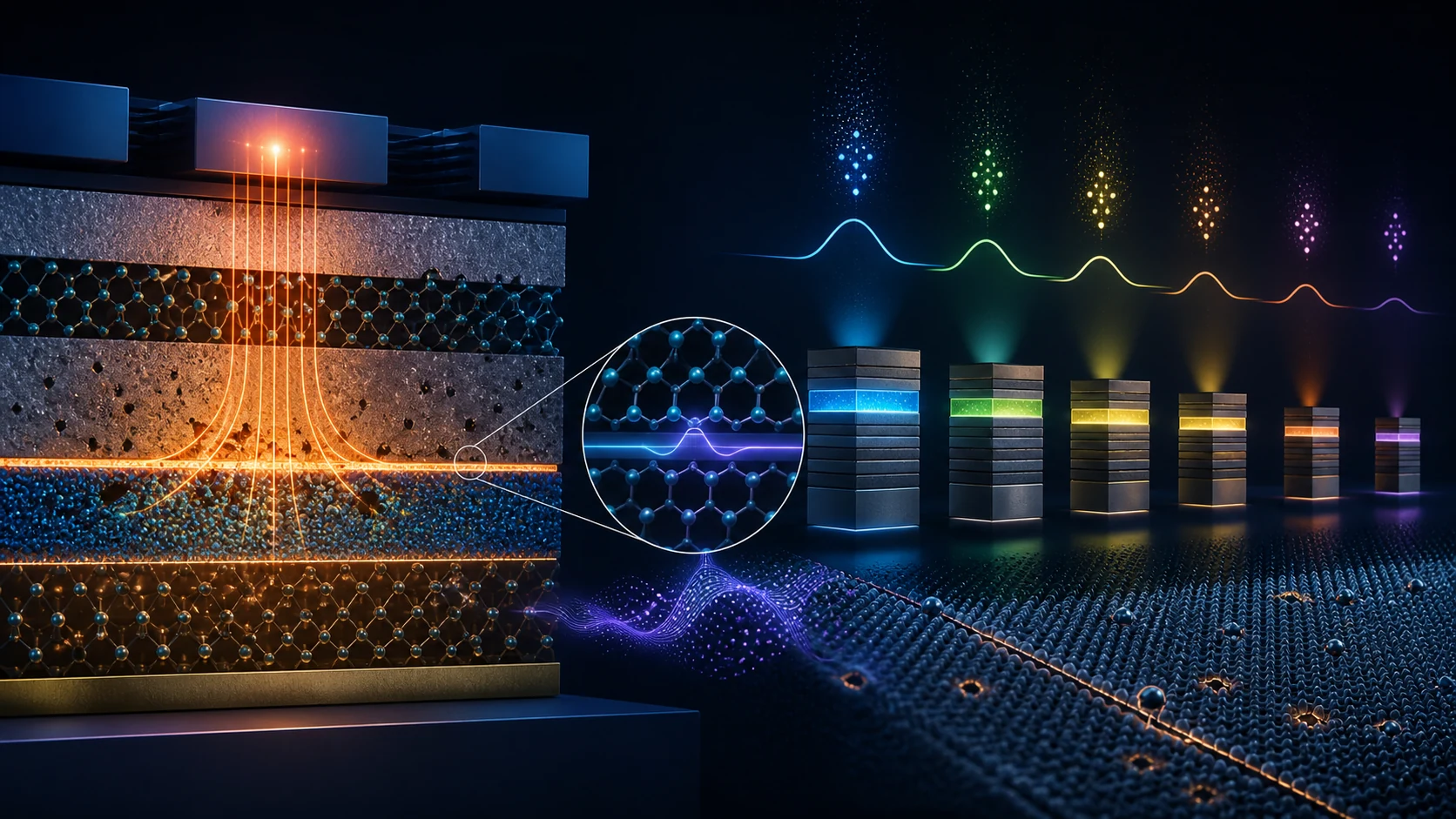
Interfaces reshape heat transport; sufficiently small dimensions can also change electronic states and barrier behavior.
One Mission; Two Active Frontiers
The pursuit of nanotechnology does not retire my strongest craft; it gives that craft a larger physical system to serve.
Software companies still need clearer architecture, better context systems, responsible AI automation, stronger developer tools, and products that create more value with less operational waste. I can help solve those problems now; continuing to do so keeps my engineering judgment sharp, creates real human value, and funds a long scientific horizon without turning the horizon into a theatrical career break.
Software is also part of modern scientific infrastructure. Simulation explores candidate behavior. Instrument software acquires and calibrates observations. Data systems preserve provenance. Automation makes repeated procedures more consistent. Visualization helps a human notice structure. AI can assist literature navigation and hypothesis formation; evidence still decides what survives.
This creates a productive exchange. Software work benefits from the discipline of physical measurement; scientific work benefits from systems architecture, reproducibility, automation, and product thinking. I am not moving from one world into another. I am learning to build across the boundary.
The Knowledge Base Method
Two evolving NanoRes knowledge bases organize the pursuit. One governs context and routing; the other preserves durable scientific learning, literature reviews, simulations, experiment ideas, and future lab plans.
Generated summaries are useful maps, not scientific authority. Claims become trustworthy only when their sources, assumptions, conditions, and review state remain attached.
A paper, observation, question, or candidate claim enters with provenance attached.
The source, method, limitations, and relevance are examined before reuse.
Human review promotes durable knowledge that can responsibly inform later work.
The public synthesis states what is known, what is inferred, and what remains open.
This publication is intentionally separate from my established software and leadership essays. The technical standard remains high; the author position remains honest. These are rigorous learning syntheses from an aspiring expert.
Scaling Laws And Surface Area To Volume Ratio
What becomes dominant when size stops being a cosmetic change?Open Learning Note
Reynolds Number And Viscous Dominance
What does motion feel like when momentum disappears almost immediately?Open Learning Note
Diffusion And Brownian Motion
How do you engineer a system when thermal motion never clocks out?Open Learning Note
Surface Charge And Nanoscale Thermal Transport
What happens when the boundary carries as much meaning as the material inside it?Open Learning Note
Quantum Confinement And Tunneling
When does making a structure smaller change the available electronic states?Open Learning Note
Disciplined learning is one part of the route. The destination requires demonstrated judgment across theory, instruments, materials, experiments, collaboration, and responsible translation into useful systems.
Build durable command of mathematics, physics, chemistry, electrical engineering, materials, and the scaling relationships that govern small systems.
Develop laboratory safety, calibration, uncertainty, sample preparation, microscopy, electrical measurement, and experimental design discipline.
Practice simulation, fabrication, device integration, control, data acquisition, and repeated comparison between predicted and measured behavior.
Participate in mentored research, accept peer scrutiny, publish corrections, and earn trust through reproducible results rather than vocabulary.
Help move responsible discoveries toward useful products while accounting for safety, access, manufacturing, environmental cost, and who benefits.

Theory creates a vocabulary; measurement, mentored construction, and review turn that vocabulary into work others can challenge.
Follow The Pursuit
The notebook will keep the ambition visible, the claims reviewable, and the corrections intact; progress should become more credible every time reality changes the model.