Nanoscale Learning Note 004
Surfaces, Charge, And Heat
As structures shrink, interfaces, electrostatic interaction, and thermal pathways become inseparable from function.
The Boundary Is Active
A surface is not merely where a material ends. It is where atoms have different neighbors, molecules adsorb, charges accumulate, liquids form structured layers, and energy crosses from one material into another. As surface area grows relative to volume, these boundary events claim a larger share of system behavior.
That is why nanotechnology cannot treat coatings, contaminants, functional groups, and interfaces as finishing details. The surface can determine whether a particle disperses or clumps; whether a sensor binds selectively; whether a device remains stable; and whether heat leaves through the path the design assumed.
Charge Reaches Into The Environment
In liquids, a charged surface attracts counterions and organizes an electrical environment near the boundary. The resulting interaction depends on the surface, the liquid, ion concentration, acidity, geometry, and distance. Two particles made from the same core material can behave differently when their surface chemistry differs.
For sensing and colloidal stability, that is not a nuisance to be averaged away. It is part of the mechanism. Surface modification can create selectivity or stability; careless assumptions can create aggregation, drift, or false signal.
At the nanoscale, an interface is not the edge of the design; it is often the center of the design.

Charge, liquid chemistry, and molecular compatibility can determine stability and selective binding at the same interface.
Heat Finds Every Weak Assumption
Heat transport also changes when dimensions approach important carrier length scales and when a structure contains many interfaces. In crystalline solids, vibrations of the lattice can be described through phonons; boundaries, defects, and interfaces can scatter them and alter thermal conduction.
This creates both opportunity and risk. A design might intentionally impede heat flow for thermoelectric performance, or it might accidentally trap heat where electronic reliability needs it removed. Smaller is not automatically cooler; the complete thermal path still has to be modeled and measured.
One Device, Several Coupled Stories
Consider a nanoscale sensor in liquid. Surface chemistry determines what binds. Charge affects nearby ions and molecules. Binding changes an electrical, optical, or mechanical signal. The measurement adds noise and perhaps heat. The fluid transports targets toward the surface. A packaging layer protects the device while also changing transport.
No single discipline owns that complete causal chain. Chemistry, materials science, electronics, fluid mechanics, thermal science, statistics, and software all contribute. That is precisely why I am pursuing a broader engineering identity; the product exists in the coupling between fields.
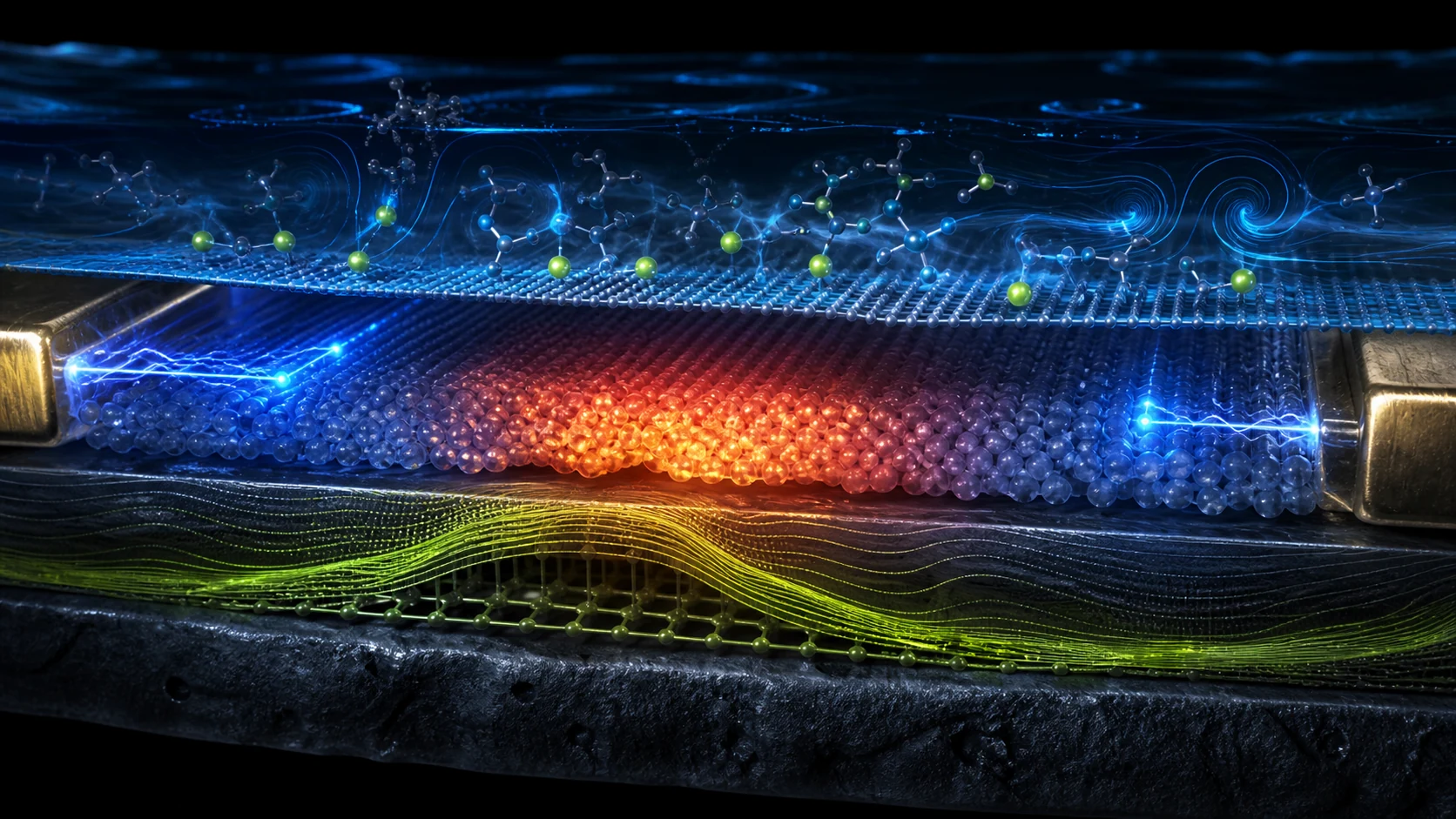
Electrical, thermal, chemical, fluid, and mechanical effects meet at the same physical boundaries; none can be designed in isolation.
The Evidence Standard
Claims about improved sensitivity, thermal performance, stability, or selectivity should name the conditions that produced them. What material and geometry were used? How was the surface prepared? What was the surrounding medium? Which controls were run? What uncertainty remains? Does the result persist across batches and time?
This is where the knowledge base method matters. A claim should remain raw intake until its source and conditions are reviewed; a learning synthesis should say what is established, what is inferred, and what still needs physical confirmation.
Context And Limits
This essay translates a working knowledge base into public understanding. It separates established principles from personal interpretation; it should mature as deeper study, better sources, simulation, measurement, and laboratory experience add pressure to the model.
The standard is simple: confidence should never outrun evidence.