Rio 2016: 360° Broadcast
Application and production-control systems for one of the earliest large-scale Olympic 360° and VR broadcast experiences.
The role statement defines my contribution boundary for this record. Client leaders, product partners, designers, artists, quality specialists, operators, and other engineers retain credit for their respective work; a project is described as independently built only when the supplied operating record supports that claim.
The Mandate
Make Immersive Live Media Usable Under Broadcast Pressure.
A 360° feed offers freedom, but freedom without orientation becomes friction. The product had to help viewers choose what to watch while giving producers the exact controls needed to frame, composite, and deliver changing live sources against an immovable global event schedule.
The Product As a Complete System
The visible experience was only one layer. These were the responsibilities that had to cooperate for the product to remain useful under real operating pressure.
Capture & Sources
Multiple live immersive feeds, source characteristics, framing constraints, and production availability.
Source conditions could change while the broadcast clock continued moving.
Composition
Cropping, transparency, framing, and controlled combination of live video elements.
Operators needed flexibility without exposing unsafe or ambiguous controls.
Production Control
Feed selection, timing, viewpoint availability, and the operator's shared picture of current state.
Every action had to remain understandable when attention was divided and recovery time was short.
Viewer Experience
Navigation across events, viewpoints, and immersive viewing modes.
The interface had to reduce disorientation without removing the agency that made 360° media compelling.
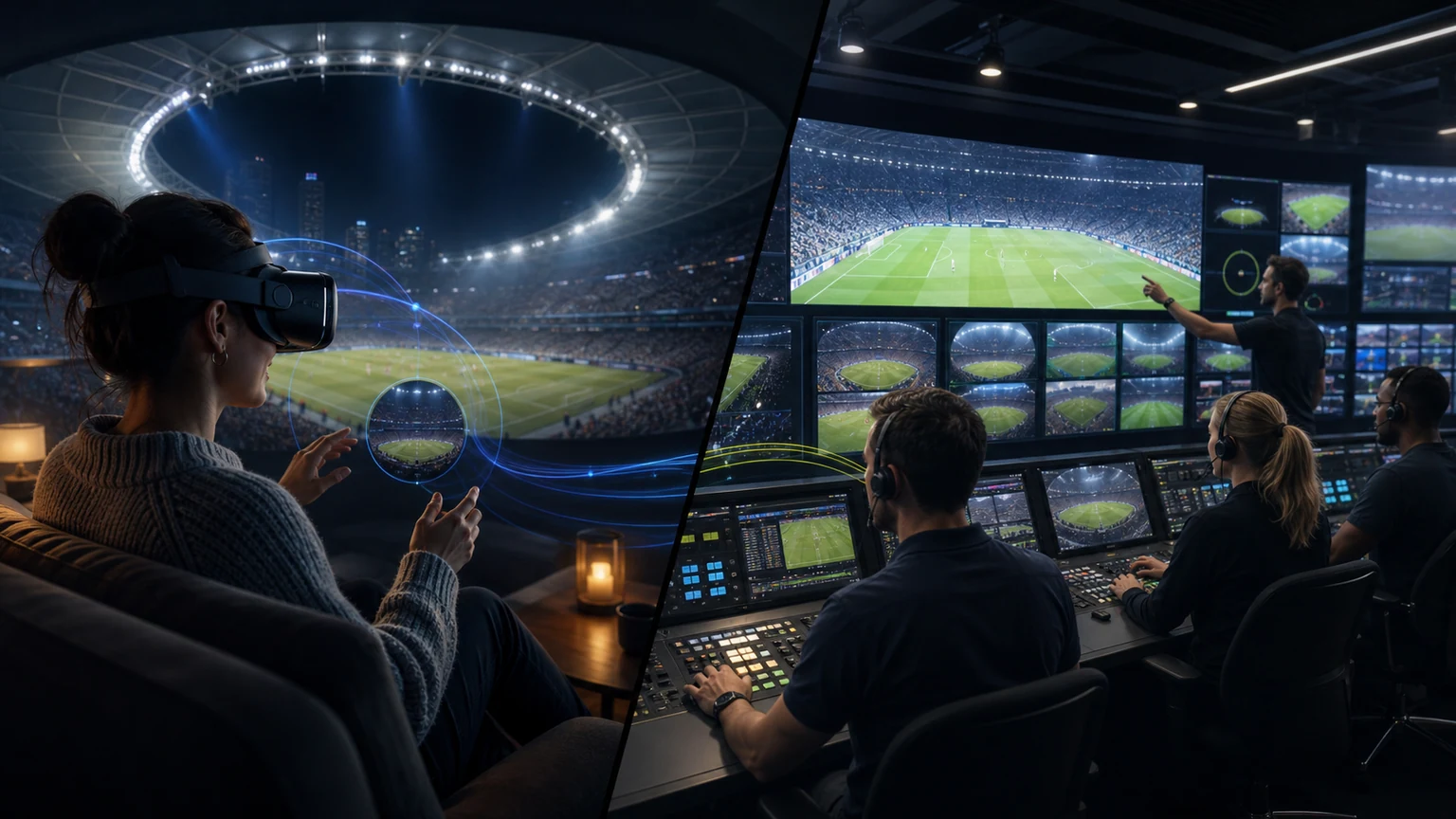
The audience receives one clear live experience while production teams retain the state and controls needed to sustain it.
What The System Had To Solve
- Make live 360° feeds understandable to viewers while giving producers precise control under broadcast pressure.
- Composite multiple video sources and adapt their framing without breaking the live pipeline.
- Ship against immovable event timelines and a global audience.
- Support two very different users at once; the viewer needed simplicity while the operator needed controlled access to complexity.
How I Approached It
- Designed viewer-facing navigation for feeds, viewpoints, and viewing modes.
- Built internal interfaces that helped operators control what viewers received and when.
- Implemented transparency shaders and cropping controls for live feed composition.
- Kept production controls explicit and reversible so operators could adapt sources without turning the live interface into an experiment.
The Tradeoffs That Shaped The Product
Architecture becomes meaningful when the decision, alternative cost, and operating reason remain visible together.
Two Interfaces, One Pipeline
Design separate viewer and production-control experiences around the same live media state.Viewers needed confidence and simplicity; operators needed precision and visibility. Combining those needs into one interface would have served neither.
Controlled Flexibility
Expose framing, cropping, and transparency controls through deliberate production tools.Live media systems must adapt, but adaptation should be bounded enough that an operator can predict the result before taking action.
Deadline As Architecture
Favor understandable, testable operational paths over speculative complexity.The event date could not move. That changed the value of every feature; reliability and recovery carried more weight than optional cleverness.
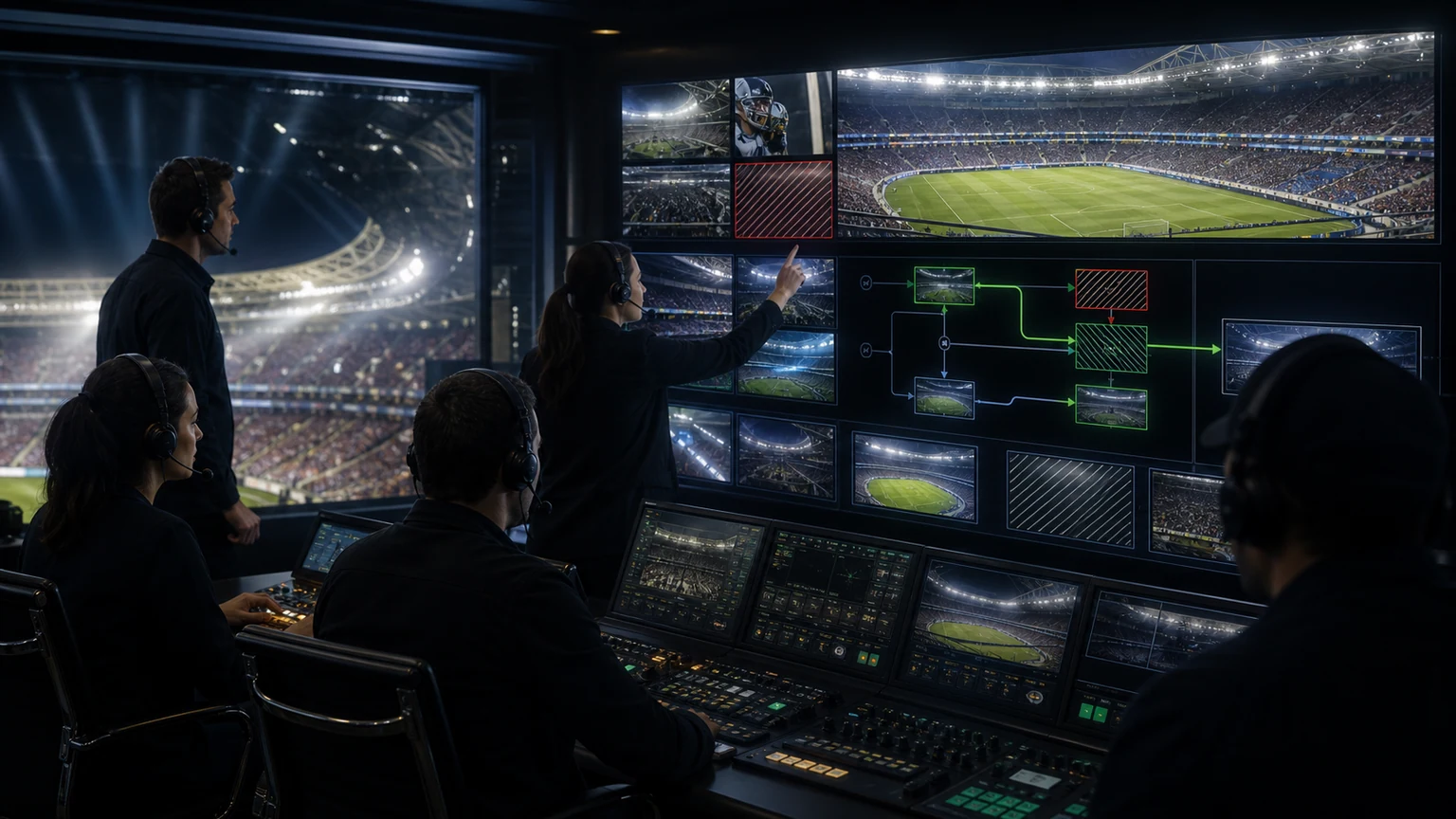
A live event does not pause for architecture; flexible composition and visible recovery paths protect the broadcast when conditions change.
What Changed
- The platform supported immersive Olympic coverage for audiences in the United States and United Kingdom.
- Production teams could frame and composite sources inside the live broadcast tool.
- The application layer remained flexible as production requirements evolved toward the event.
- Viewer and operator interfaces served the same broadcast pipeline while remaining purpose-built for their different cognitive loads.
What Supports The Story
Evidence is classified so a reader can distinguish public verification, portfolio-reported outcomes, and implementation details shared from direct experience.
Event Context
The system supported immersive coverage connected to the Rio 2016 Olympic Games.
Audience Reach
Coverage served audiences in the United States and United Kingdom.
Rendering Controls
Transparency shaders and cropping controls supported live feed composition.
Interface Scope
Both viewer navigation and internal production-control interfaces were part of the application work.
This page focuses on the application and production-interface responsibilities in my project record. I do not reproduce rights-sensitive Olympic media, confidential operational details, or partner-owned broadcast material here.
What The Project Taught Me
Prioritize operator clarity and controlled flexibility because live broadcast pressure leaves little room for interpretation.
An immovable deadline is not only a scheduling constraint; it changes what the architecture must make safe and obvious.
Useful for live systems, event technology, operational interfaces, and products whose failure window is measured in seconds.
What This Work Demonstrates
- Broadcast interfaces
- 360° video
- Rendering
- Live operations