OGAL + Token Toss
A public-good asset protocol and the end-to-end game that demonstrates portable, verifiable, creator-owned levels.
The role statement defines my contribution boundary for this record. Client leaders, product partners, designers, artists, quality specialists, operators, and other engineers retain credit for their respective work; a project is described as independently built only when the supplied operating record supports that claim.
The Mandate
Give Creator-Made Assets a Verifiable Life Beyond One Game.
User-generated content is often trapped inside the product that created it. OGAL explores a different boundary; ownership, authority, content integrity, and history can be publicly verifiable while the asset format, storage strategy, and player experience remain free to evolve.
The Product As a Complete System
The visible experience was only one layer. These were the responsibilities that had to cooperate for the product to remain useful under real operating pressure.
Owner Authority
Namespaced ownership, update permission, deterministic addresses, and explicit governance boundaries.
The protocol had to make control inspectable without centralizing every product decision.
Asset Integrity
Canonical registry state, content hashes, audit history, and format-agnostic manifest references.
Verification needed to survive changes in storage, game format, and presentation.
Developer Integration
Node.js helpers, operational tools, wallet connections, and the Solana Toolbelt for Unity.
A correct program would still fail adoption if every studio had to become a Solana specialist first.
Creator Experience
Token Toss level editing, publishing, updating, sharing, and free player access.
The infrastructure claim needed to disappear into a creation loop that felt like a product.
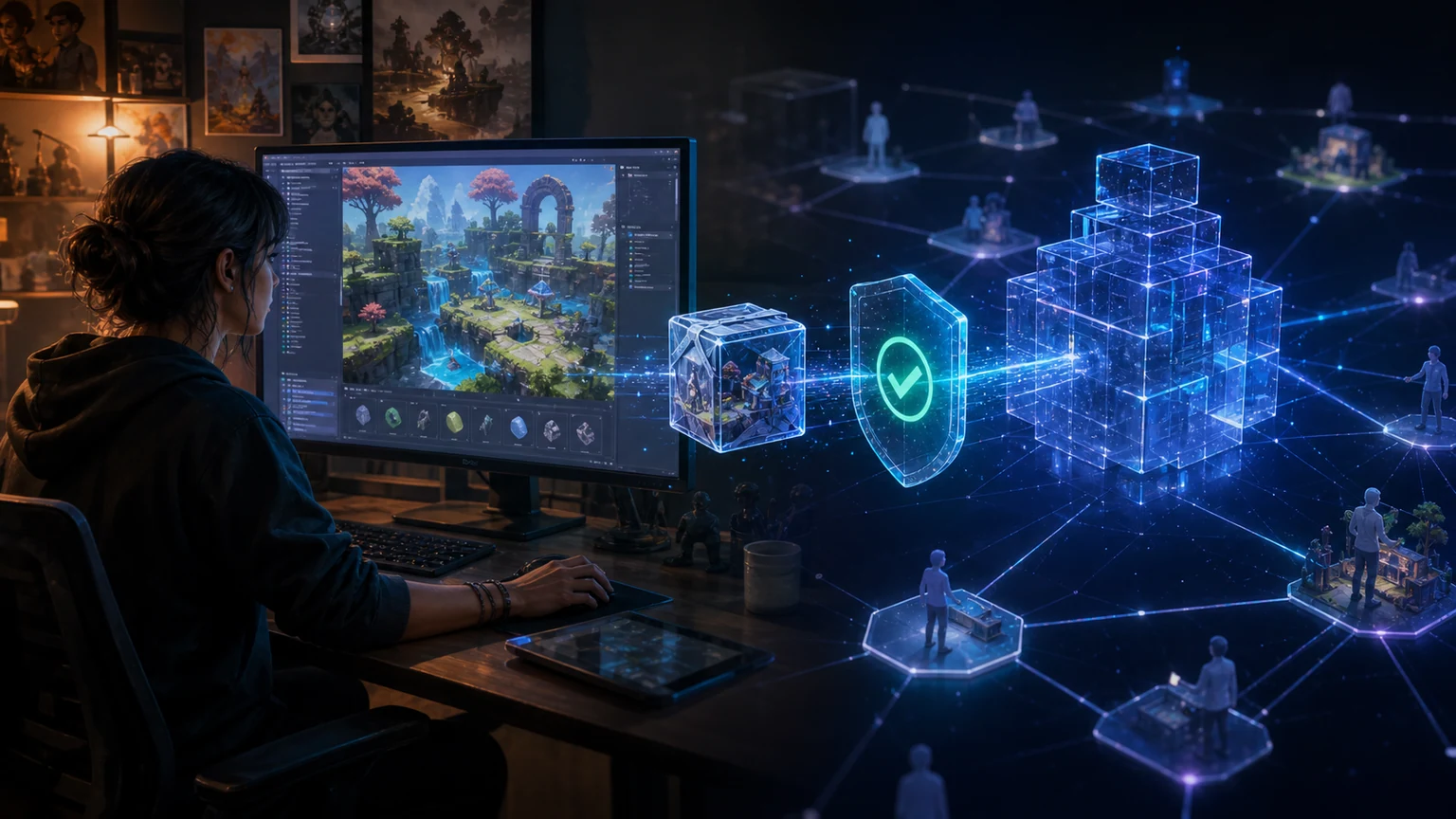
A creator can build inside a game while ownership and integrity remain governed independently of that one experience.
What The System Had To Solve
- Let creators own and update game assets without forcing every studio to maintain a custom on-chain program.
- Keep manifests format-agnostic while preserving a canonical ownership and audit record.
- Prove the infrastructure in a product people could actually build and play with.
- Separate public verification from game-specific storage and presentation so the protocol could serve more than one content format.
How I Approached It
- Designed namespaced authority, deterministic addresses, guardrails, and content-hash verification.
- Built command-line operational tools and a reusable Solana Toolbelt for Unity.
- Created Token Toss end-to-end, including its in-game editor and publishing flow.
- Documented the complete path from program architecture through Unity integration and a recorded Token Toss proof of concept.
The Tradeoffs That Shaped The Product
Architecture becomes meaningful when the decision, alternative cost, and operating reason remain visible together.
Registry, Not Asset Format
Keep OGAL focused on authority, identity, and integrity while allowing manifests to describe different asset types.A protocol becomes more reusable when it verifies what must be shared without dictating every product's content model.
One Shared Program
Design partner onboarding around an existing mainnet program instead of requiring contract redeployment.Shared infrastructure reduces duplicated operational risk and gives integrations a common, inspectable foundation.
Prove It Through Token Toss
Build the editor, publishing flow, update path, and playable sharing loop from end to end.A protocol diagram cannot reveal every integration cost. A real creator product forced the abstractions to meet user experience, tooling, and operational reality.
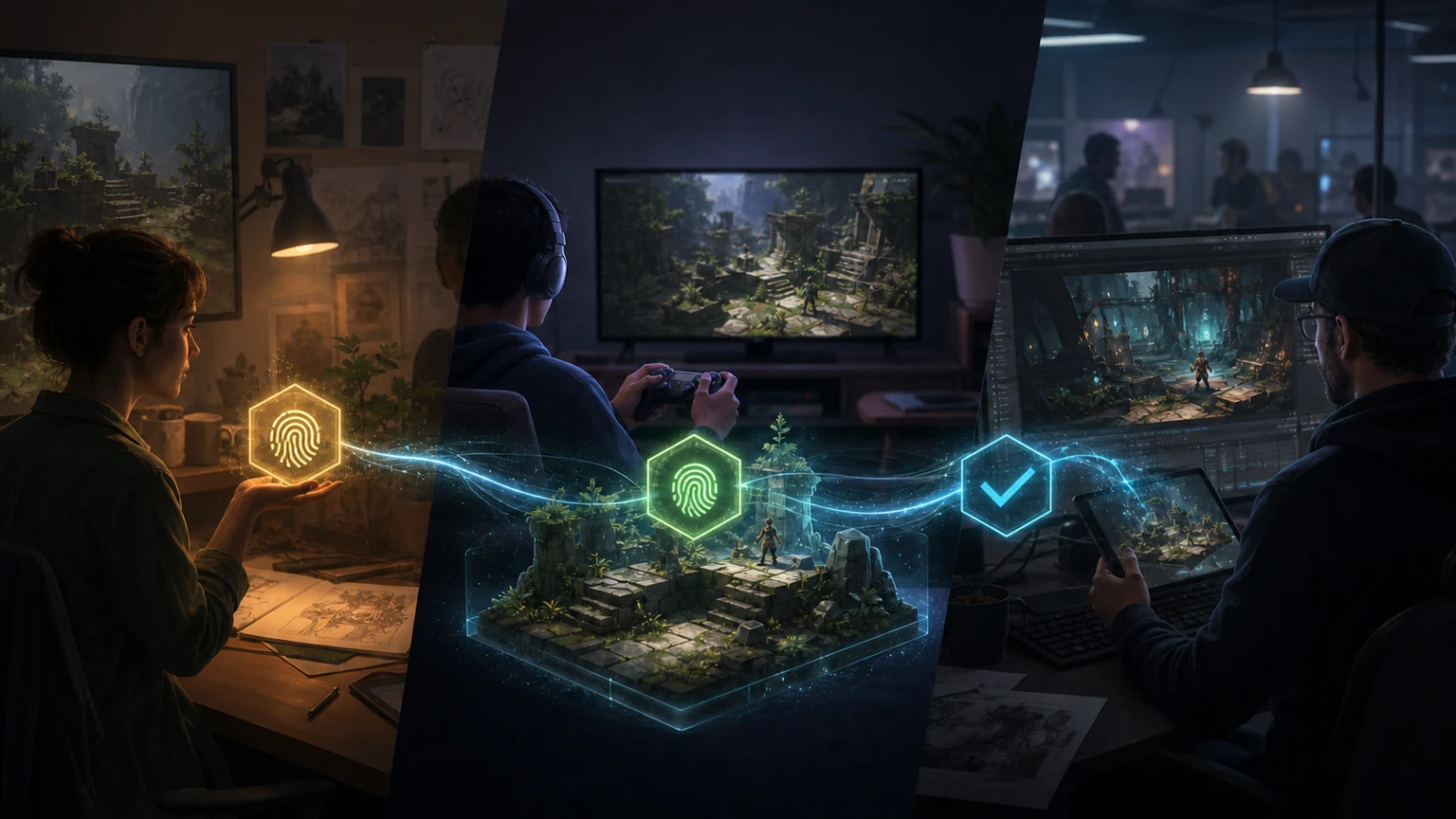
A level can move between creators, players, and participating products while the governing record preserves authority.
What Changed
- OGAL is deployed on Solana mainnet as open public-good infrastructure.
- Every Token Toss level can be published, updated by its owner, and read without another write transaction.
- The public NanoRes documentation connects the architecture, open repositories, and Token Toss proof video for review and reuse.
- Partner teams can use the shared program and Unity tooling without redeploying the contract for each new experience.
What Supports The Story
Evidence is classified so a reader can distinguish public verification, portfolio-reported outcomes, and implementation details shared from direct experience.
Mainnet Program
GwMpopxNkDYsnucBRPf47QSEsEzA3rS1o6ioMX78hgqx
Open Program
The OGAL program, helpers, and integration material are available for inspection in the public repository.
Unity Integration
The Solana Toolbelt packages reusable services and Unity-facing integration guidance.
Product Proof
The NanoRes documentation includes the Token Toss proof-of-concept video and supporting architecture.
OGAL and the Solana Toolbelt are public. The complete Token Toss proof-of-concept repository is not public; the public NanoRes documentation is the canonical place to review its video, integration story, and relationship to OGAL.
What The Project Taught Me
Prove the protocol through a complete creator product instead of asking an abstract infrastructure claim to carry the idea.
Open infrastructure earns trust when authority, verification, and implementation can all be inspected.
Useful for creator ecosystems, public-good protocols, portable assets, and products that need credible ownership beyond one application.
What This Work Demonstrates
- Protocol design
- Rust / Anchor
- Unity
- Creator economy